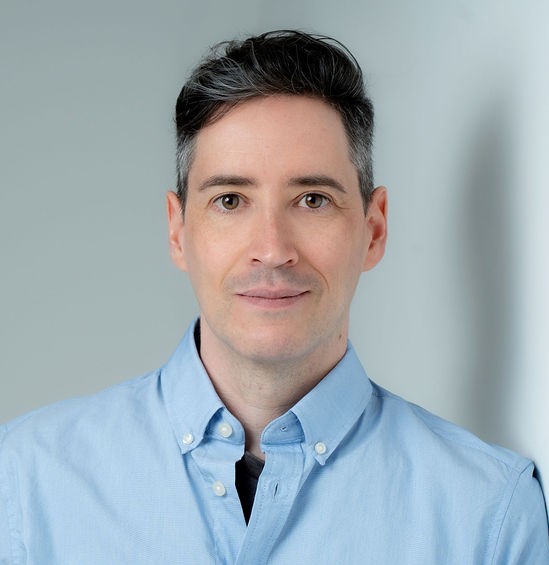
About Me
My counselling background and credentials
- B.A. (Honours) Psychology
- Master of Social Work (MSW), with a focus on mental health counselling
- Registered Social Worker (RSW) with the Ontario College of Social Workers and Social Service Workers (OCSWSSW)
About my general approach to therapy
There's a lot more I could say about my style as a counsellor, but here are the main points I usually share when someone is trying to decide whether to work with me:
- I think both practical, present-focused coping tools and deeper exploration into past baggage and root causes have their place. It doesn't have to be an Either/Or choice between them. What's key is adjusting to what each client wants help with, what they've tried already, and what they're open to. At times the common sense move is to learn some hands-on skills that can be applied right away. In other cases a client will feel a bit better by using coping techniques, but they can tell there's a deeper core to their problems they need to look into.
- I know that with the right approach past experiences can be worked with in a way that leads to true healing and change. Delving into the past is sometimes written off as pointless navel gazing, but it doesn't have to be that way. The goal of past-oriented therapy isn't to arrive at a bunch of dry explanations or insights for their own sake. Those can be interesting food for thought, but usually don't help a ton. It's to create real emotional shifts.
- I appreciate the power of experiential therapy methods. That is, techniques that focus on things like inner imagery and role plays, that "put you there", so you can access feelings and perspectives you might not be able to get to if you were only speculating or analyzing things from your more everyday mindset.
About my speciality in helping clients with social challenges
On this page I explain how as a counsellor I can help clients who struggle with relational issues like shyness and loneliness. Here I'll go into my personal background in that area, and how it led to the therapy and writing work I do today:
- I was lonely and socially awkward growing up. Partially that's because I felt shy, fearful, and insecure around people my age. I also just had a more quirky, off-beat personality, and I didn't fit in with most of my classmates.
- Around the time I was in university I spent several years working on my underdeveloped people skills and confidence. Before that I had a phase where I was mostly oblivious to my social problems, but later into my teens they started to bother me. I plugged away at it, and by my mid-twenties I felt like the worst of it was behind me. I hadn't turned into the world's most charismatic person, but I felt Contentedly Average, rather than unhappily behind. I didn't give up my quirkier side, and found a way to hold onto it and also have the kinds of friendships I wanted.
- My undergrad degree was in psychology. I was awkward when I was younger, but of course that wasn't the entirety of who I was. I was interested in mental health and helping others.
- When I was working on my social skills I had to figure many things out for myself. There weren't nearly as many resources for it as there are today.
- In the years after working through my social issues I sometimes thought, "I wish there was a way to share what I've learned, to help other shy, awkward people get to a better place more quickly than I did." But again, this was in the mid-2000's and there weren't as many ways for someone to put their writing out there as there are now. I set the thought aside and got on with my career. After I finished my bachelors degree I worked at a couple of mental health research office jobs.
- One day I realized I could start my own website and put all my ideas about getting over social awkwardness there. Personal websites were starting to get more common. In 2006, during the time off between two jobs, I created SucceedSocially.com and slowly started adding articles to it. It gradually started getting more visitors, but for the first several years saw it as a side project.
- In the late 2000's I went to grad school to train as a counsellor. I would have taken this step anyway, but since I was now learning and writing so much about social issues, I knew down the road it's something I could specialize in as a therapist.
- When I graduated with my Social Work degree in 2011 my site had gotten fairly popular and I decided to put more of my energy into it. A few years later I started working on my book, and published it in early 2016.
- I started my own practice in 2018. Many of my early clients found me through my writing, and so our work centered around improving their social relationships. I continue to help clients with those concerns, but not exclusively.
About becoming an Internal Family Systems therapist
Here I go into how I use Internal Family Systems (IFS) therapy with some of my clients. I'll quickly explain how it became on one the main methods I use:
- In 2020 my own therapist started using IFS with me, and it led to a whole new level of healing and progress. I'd previously benefitted from other modalities, like Cognitive-Behavioral Therapy and Acceptance And Commitment Therapy, but IFS helped me shift some things on a deeper level.
- Around the same time some people I knew had good things to say about it. A therapist colleague said it was working well for their clients. A friend said they were doing it with their own counsellor and it was really making a difference. IFS just seemed to be in the air.
- I trained and learned as much as I could about IFS and started using it with my clients. I could see how much it helped some of them, when other methods weren't hitting the mark. No, it wasn't a magical cure-all, and it wasn't the right fit for everyone, but it was certainly a valuable new approach to have when I needed it.
- Moreover, using IFS just felt like it clicked for me. I found it came naturally to use it to help clients explore and work with their inner world of parts.
- I continue to improve and flesh out my skills and knowledge as an IFS therapist. There's always more to learn, whether it's through a practice or consult group, self-study, or so on.